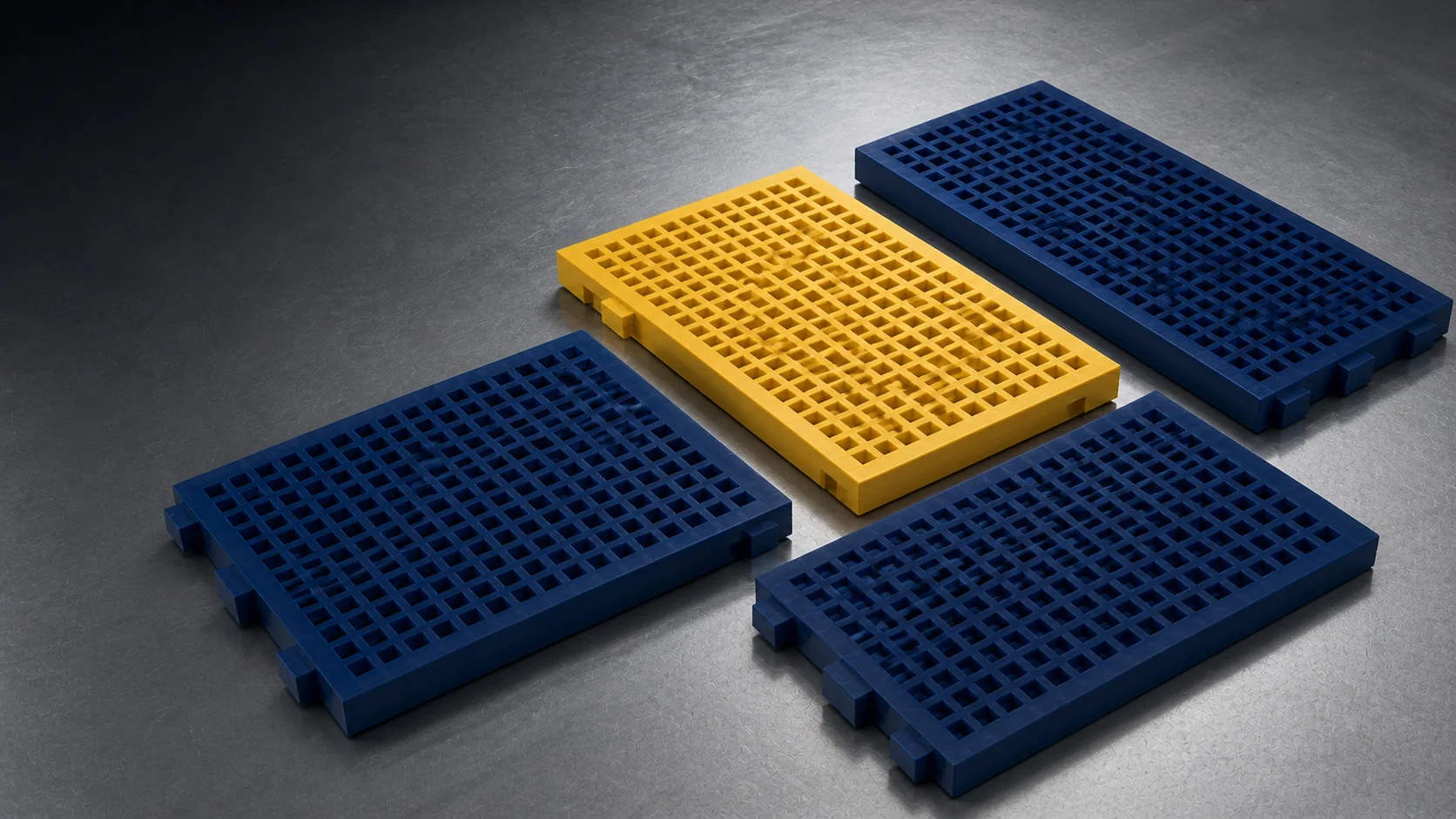
One deck can need more than one panel form. Screening openings, solid areas and mounting geometry work together. Start with the material separation task and the position on the deck.
01
Square-aperture panels
Particle sizing and classification
How it works
Openings have defined dimensions in both directions. The aperture, bridge width and overall layout affect the screening surface and its open area.
Selection & comparison details
Compare the required separation with particle shape, feed and deck duty. Nominal aperture is one input—not a guaranteed cut size or throughput.
02
Slotted-aperture panels
Duties where opening shape and direction matter
How it works
Elongated openings change particle passage. Slot direction relative to material travel is part of the specification.
Selection & comparison details
Compare slot width, length and direction with particle shape, moisture and pegging or blinding. The same slot width in a different layout can behave differently.
03
Solid & transition areas
Feed zones, edges and selected deck positions
How it works
A solid area has no screening apertures. It can provide protection or close an area in the deck arrangement, while also reducing available open area.
Selection & comparison details
Review impact, support, fastening and neighbouring panels. Choose the construction for that deck position rather than replacing every zone with the same panel.
Technical references
These references support the general product and application explanations. The confirmed drawing and offer define the specific product requirement.
Read the screening surface together with the edges, underside and deck interface. Clear photographs and dimensions give each proposed panel the same comparison basis.
01
Overall geometry
Panel length, width and thickness; edge features and any change in section.
02
Aperture
Opening size, shape and direction. Include a close photograph with a scale reference.
03
Underside and edges
Show the bottom face, supports, locating features and edge profile.
04
Fastening and deck interface
Record how the panel locates and locks into the deck, including mating parts.
05
Application and operating conditions
Material screened, wet or dry use, deck position and the issue with the existing panel.
06
Reference evidence
A drawing, clear photographs, a measured sketch or a sample for further comparison.
Screening duty
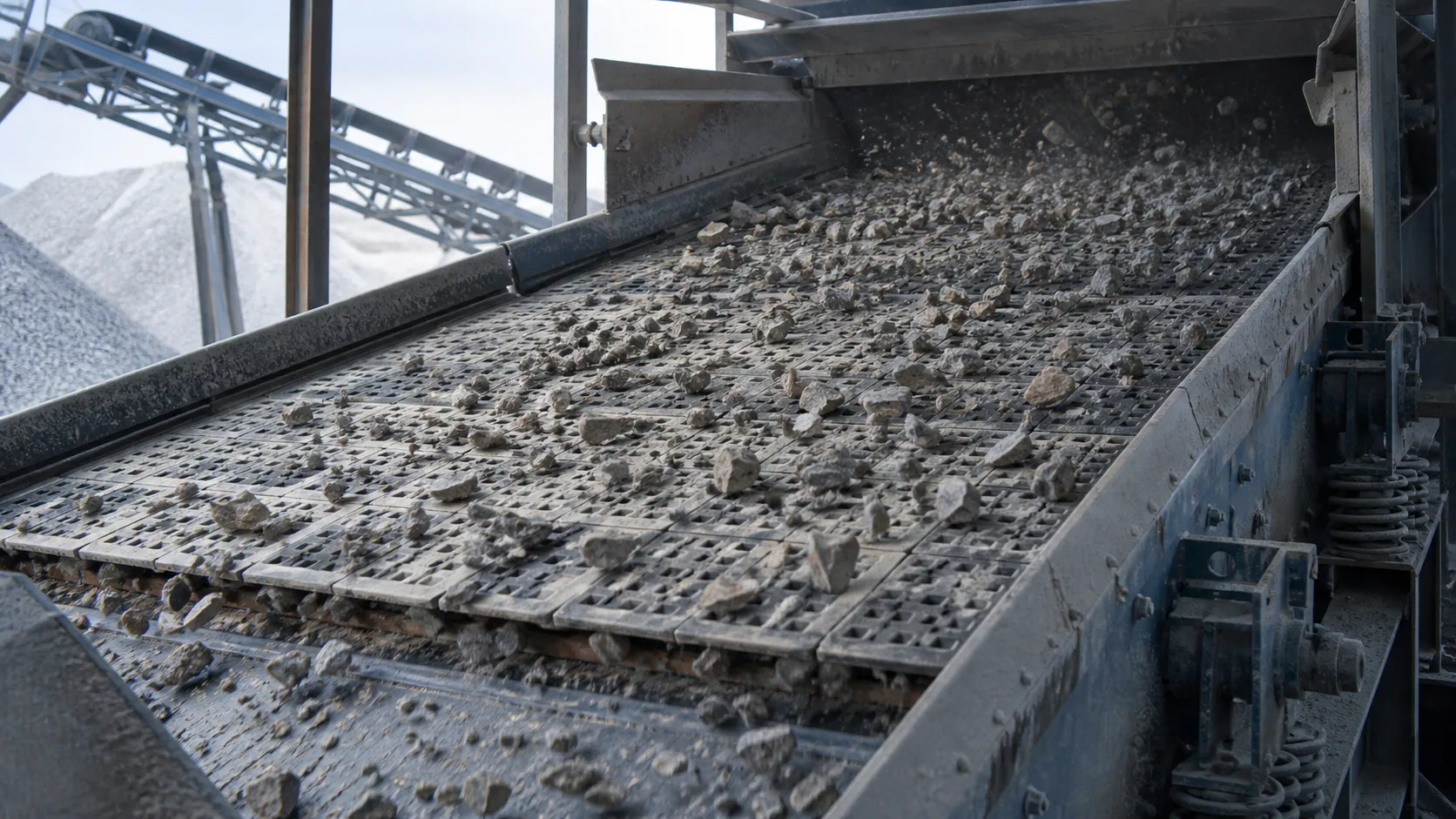
Mining, quarry and aggregate screening.
Material characteristics, wet or dry operation, impact, blinding or pegging, wear and maintenance priorities shape the review of screening media.
Screening application context
Screening conditions to review together
Material and separation task
Record the screened material, feed characteristics and required separation.
Wet or dry duty
Note moisture, process water and conditions affecting material flow.
Deck and installation
Identify panel position, support, fastening and the existing equipment interface.
Operation and maintenance
Include impact, blinding or pegging, wear observations and planned maintenance.
Panel layout, aperture and fastening tied to each panel position and the existing deck interface.
Fit and inspection basis
A fit sample and checks against the agreed dimensions, aperture and fastening details, with a separate operating trial when needed.
Site-ready replacement record
Quantities grouped by panel type and deck position, with identification, packing and timing connected to installation or maintenance.
Screening media enquiry
Give us the existing panel and screening duty. We will structure the replacement discussion.
Start with a drawing, dimensioned photos, a sample description or equipment reference. We will identify the missing fit questions and coordinate panel comparison, sampling and agreed checks.